If your morning routine starts with a bowl of cereal, a bagel, or a glass of orange juice, you are likely setting yourself up for an uphill battle against hunger all day. Breaking an overnight fast with refined carbohydrates triggers a rapid spike in blood sugar, followed by an inevitable insulin crash. By mid-morning, you are dealing with low energy, intense sugar cravings, and an urge to grab whatever snack is nearby.
Shifting your focus to a high-protein breakfast breaks this cycle. Prioritizing lean protein when you wake up stabilizes your blood sugar, keeps hunger hormones in check, and gives your metabolism a natural boost.
The Biology of How Protein Controls Hunger
Protein handles weight management far better than carbs or fats due to how your body processes it.
THE SATIETY CASCADE
| [ Protein Ingestion ] | |
| ──► Stimulates Gut L-Cells | ──► Releases GLP-1 & PYY (Suppresses Appetite) |
| ──► Inhibits Oxyntic Cell | ──► Decreases Ghrelin (Reduces Hunger Signals) |
| ──► Prolongs Digestion | ──► Delays Gastric Emptying (Extended Fullness) |
1. The Hunger Hormones: Ghrelin, PYY, and GLP-1
Your appetite is driven by a network of chemical signals that tell your brain whether you are full or starving.
-
Ghrelin: This is your primary hunger hormone. It builds up when your stomach is empty and drops after you eat. Protein suppresses ghrelin more effectively and for longer periods than carbohydrates or fats.
-
PYY and GLP-1: These are fullness hormones released by your gut when nutrients arrive. Protein is the strongest trigger for these hormones, signaling your brain to turn off the urge to eat.
2. The Calorie-Burning Bonus (Thermic Effect)
Your body has to expend energy just to digest and process food. This is known as the Thermic Effect of Food (TEF), and macronutrients require vastly different amounts of work:
-
Fats: 0% to 3% energy cost
-
Carbohydrates: 5% to 15% energy cost
-
Proteins: 20% to 30% energy cost
When you eat 100 calories of lean protein, your body uses roughly 20 to 30 of those calories just to break it down. This keeps your metabolic rate slightly elevated for several hours after eating.
3. Keeping Your Muscle Mass Intact
When you are in a calorie deficit to lose weight, your body looks for tissue to break down for energy. Without enough dietary protein, a good chunk of the weight you lose will come from lean muscle mass instead of fat.
Muscle is highly metabolic—it burns more calories at rest than fat tissue does. Eating a protein-rich breakfast kicks off muscle protein synthesis, helping you preserve that lean tissue and keep your resting metabolism running strong.
The Morning Goal: 30 to 40 Grams
A common mistake is saving all your protein for dinner. Research suggests your body manages hunger and muscle maintenance much better when protein is distributed evenly throughout the day, starting with your first meal.
To unlock these benefits, aim for 30 to 40 grams of high-quality protein at breakfast. This amount provides a solid dose of essential amino acids—especially leucine (around 2.5 to 3 grams), which acts as the metabolic switch to preserve muscle tissue.
Comparing Morning Protein Sources
Here is how common breakfast options stack up when you look at their nutritional profiles, calories, and how well they keep you full.
| Breakfast Base Option | Standard Serving Size | Protein Content | Average Calories | Satiety Factor | Key Nutrients Provided |
| Whole Eggs | 3 large eggs | 18g | 210 | High | Choline, Vitamin B12, Vitamin D |
| Liquid Egg Whites | 1 cup (240ml) | 26g | 125 | Medium-High | Potassium, Riboflavin |
| Plain Non-Fat Greek Yogurt | 1 cup (245g) | 25g | 130 | High | Calcium, Zinc, Vitamin B12 |
| Low-Fat Cottage Cheese (2%) | 1 cup (225g) | 28g | 180 | Very High | Casein protein, B vitamins, Selenium |
| Whey Protein Isolate | 1.5 scoops | 37g | 165 | Medium | Branched-chain amino acids, Calcium |
| Firm Tofu | 1 cup (250g) | 20g | 180 | Medium-High | Iron, Magnesium, Calcium |
| Smoked Salmon | 4 oz (113g) | 25g | 135 | High | Omega-3 fatty acids, Potassium |
5 Simple, High-Protein Breakfast Blueprints
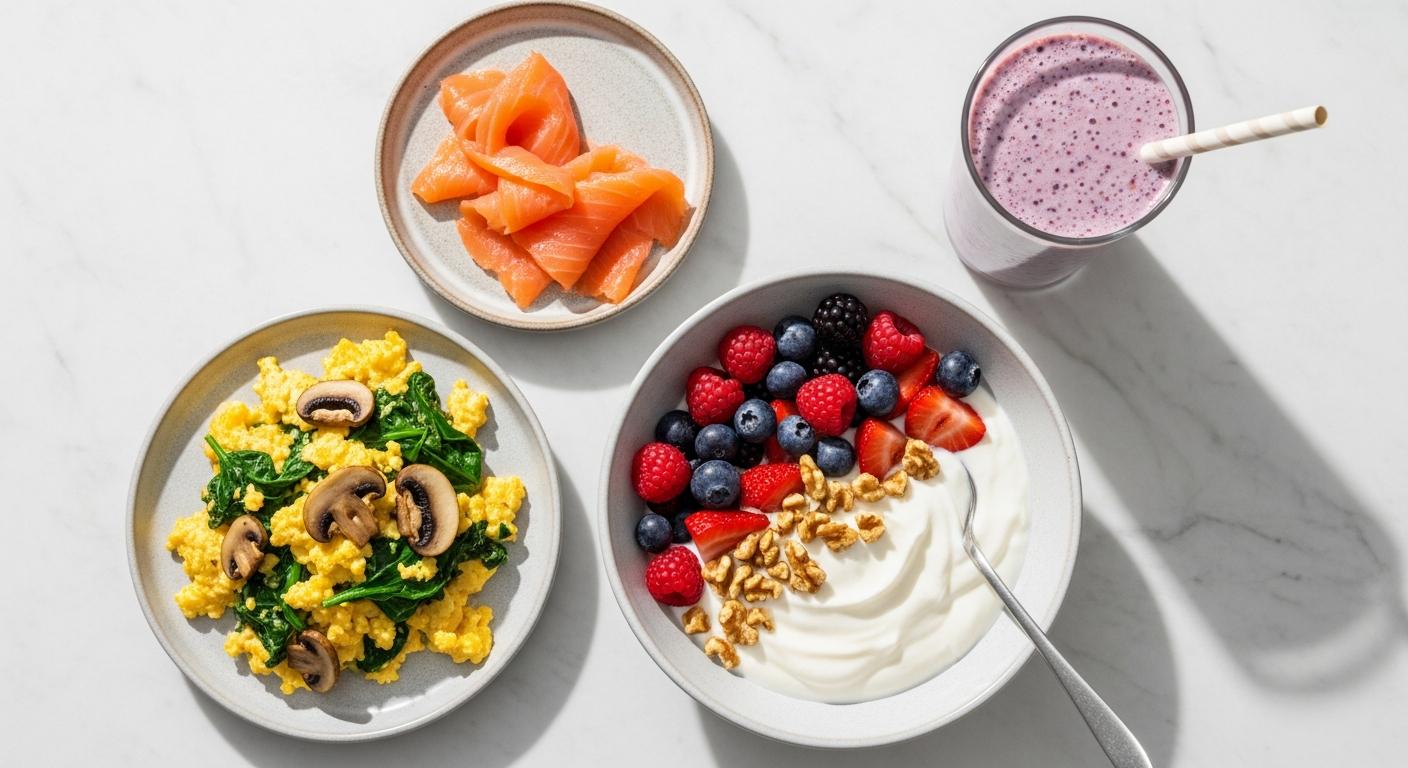
These practical meal ideas deliver at least 30 grams of protein, while keeping carbs, healthy fats, and fiber in balance.
Blueprint 1: The Mediterranean Whole Egg & Egg White Scramble
This meal combines whole eggs for micronutrients with pure egg whites to ramp up the protein without piling on extra calories.
-
Why it works: One whole egg gives you essential fat-soluble vitamins and choline, while a cup of egg whites provides a clean volume of protein.
-
Ingredients:
-
1 large whole egg
-
1 cup liquid egg whites
-
2 cups fresh baby spinach
-
0.5 cup cherry tomatoes, halved
-
1 oz low-fat feta cheese
-
1 teaspoon olive oil
-
-
How to make it: Heat the olive oil in a non-stick skillet over medium heat. Sauté the spinach and tomatoes until the greens wilt. Whisk the whole egg and egg whites together, pour into the pan, and stir until set. Top with the crumbled feta, black pepper, and a pinch of salt.
-
Macros: ~36g Protein | ~8g Carbs | ~11g Fat | ~2g Fiber | 285 Calories
Blueprint 2: The Probiotic Cottage Cheese & Berry Bowl
Cottage cheese is an underutilized weight-loss food. It is packed with casein protein, which digests slowly and keeps you full for hours.
-
Why it works: Choosing 2% cottage cheese balances creaminess with low energy density. Pairing it with berries brings in fiber and a wealth of antioxidants.
-
Ingredients:
-
1 cup 2% low-fat cottage cheese
-
0.5 cup wild blueberries
-
0.5 cup raspberries
-
1 tablespoon chia seeds
-
0.5 oz crushed walnuts
-
A pinch of cinnamon
-
-
How to make it: Scoop the cottage cheese into a bowl. Layer the blueberries, raspberries, chia seeds, and walnuts right on top. Finish with a light dusting of cinnamon.
-
Macros: ~32g Protein | ~22g Carbs | ~12g Fat | ~8g Fiber | 325 Calories
Blueprint 3: Vanilla Berry Protein Oats (“Proats”)
Standard oatmeal is mostly carbs, which can be digested quickly and leave you hungry. Stirring in a high-quality protein powder transforms it into a steady, muscle-preserving breakfast.
-
Why it works: To avoid clumping, add the protein powder after the oats are cooked. Flaxseeds add healthy fats and extra fiber.
-
Ingredients:
-
0.5 cup rolled oats
-
1 cup water or unsweetened almond milk
-
1.25 scoops vanilla whey or plant protein isolate
-
1 tablespoon ground flaxseeds
-
0.5 cup sliced strawberries
-
-
How to make it: Cook the oats in water or almond milk over medium heat for 5 to 7 minutes until creamy. Remove the pan from the stove and let it cool for a minute. Stir in the protein powder and flaxseeds vigorously until smooth. Top with the strawberries.
-
Macros: ~35g Protein | ~34g Carbs | ~6g Fat | ~7g Fiber | 330 Calories
Blueprint 4: Southwestern Tofu and Black Bean Scramble
If you eat a plant-based diet, firm tofu is a stellar choice because soy contains all nine essential amino acids.
-
Why it works: Black beans boost the fiber content significantly, which helps with gut health and keeps you physically full.
-
Ingredients:
-
7 oz firm tofu, drained and pressed
-
0.5 cup canned black beans, rinsed
-
0.25 cup diced red bell pepper
-
0.25 cup diced red onion
-
1 tablespoon nutritional yeast (for a savory, cheesy flavor)
-
0.5 teaspoon turmeric powder
-
0.25 medium avocado, sliced
-
-
How to make it: Crumble the tofu with a fork until it looks like scrambled eggs. Sauté the onion and bell pepper in a skillet with a light spray of oil for 3 minutes. Add the tofu, black beans, nutritional yeast, and turmeric. Cook for another 5 minutes, then serve topped with the avocado slices.
-
Macros: ~30g Protein | ~26g Carbs | ~13g Fat | ~10g Fiber | 340 Calories
Blueprint 5: Smoked Salmon and Avocado Egg White Wraps
Perfect for a low-carb approach, this savory option relies on premium seafood proteins and healthy essential fats.
-
Why it works: Cooking egg whites flat creates a sturdy, high-protein wrap that easily replaces flour tortillas.
-
Ingredients:
-
1.25 cups liquid egg whites
-
3 oz wild-caught smoked salmon
-
0.25 medium avocado, mashed
-
1 cup fresh arugula
-
1 teaspoon capers
-
-
How to make it: Pour the egg whites into a large non-stick skillet over medium heat, tilting it to form a thin, even layer. Cover and cook for 3 minutes until opaque and firm. Slide the egg white “tortilla” onto a plate, spread the mashed avocado across it, and layer on the smoked salmon, arugula, and capers. Roll it up tightly.
-
Macros: ~38g Protein | ~5g Carbs | ~10g Fat | ~3g Fiber | 262 Calories
Where People Go Wrong with Morning Protein
It is easy to make a few strategic mistakes that can slow down your progress when adjusting your diet.
1. Falling for the “Protein” Marketing Trap
Grocery store shelves are packed with processed foods sporting a “high protein” sticker—like protein cookies, processed bars, and sugary breakfast shakes. Many of these products are loaded with added sugars, refined oils, or artificial fillers. If a bar gives you 20 grams of protein but comes with 20 grams of sugar, it will not help you lose weight efficiently. Stick to whole, single-ingredient foods whenever possible.
2. Leaving Out the Fiber
Protein keeps you full, but it works best when paired with dietary fiber. Fiber adds physical volume to your stomach, stretching the stomach walls and sending a physical signal to your brain that you are full. If you just drink a quick protein shake in water, you might find yourself hungry an hour later. Always include a source of fiber like greens, berries, chia seeds, or oats.
3. Relying Entirely on Shakes
Liquid meals can be incredibly convenient, but your body processes them faster than solid food because you skip the chewing process. Chewing starts the digestion process and tells your brain you are actually consuming a meal. If you prefer a morning shake, try turning it into a smoothie bowl with some solid toppings, so you have something to chew.
Easy Prep Tips for Busy Mornings
When you are short on time, it is easy to default to convenient, low-protein processed options. A little weekend prep makes a massive difference:
-
Bake an Egg Frittata: Whisk a carton of egg whites, a few whole eggs, spinach, and mushrooms together. Bake in a casserole dish at 350°F for 25 minutes. Slice it into portions for the week so you can just reheat and go.
-
Prep Dry Oats Over Weekend: Portion out your oats, chia seeds, and flaxseeds into mason jars. In the morning, just add water or milk, microwave, and stir in your protein powder.
-
Measure Out Portions Ahead: Keep small containers of nuts, seeds, or protein powder pre-measured in your pantry to remove any morning guesswork.
The Reality Check: Context Matters
While a high-protein breakfast is a fantastic tool, it is not a magic fix for fat loss. Protein helps you lose weight primarily because it makes it much easier to stick to a modest calorie deficit by managing your appetite. If your overall intake across the entire day is higher than the calories you burn, you will not lose weight—no matter how much protein you eat at 7:00 AM.
Individual health also plays a major role. If you have underlying metabolic issues or if you manage chronic kidney disease, your body processes protein differently. Anyone managing a medical condition should speak with a doctor or a registered dietitian before making structural shifts to their daily nutrition.
Key Takeaways
-
Hormonal Control: Protein directly suppresses your hunger hormones while turning on the signals that tell your brain you are full.
-
Hit the Threshold: Aim for 30 to 40 grams of high-quality protein at breakfast to preserve muscle tissue and stay satisfied until lunch.
-
The Digest Tax: Protein requires more energy for your body to break down than carbohydrates or fats, giving your metabolism a slight natural lift.
-
Don’t Forget Fiber: Always pair your morning protein with 7 to 12 grams of fiber to keep your digestion steady.
-
Prioritize Whole Foods: Rely on basic ingredients like eggs, Greek yogurt, cottage cheese, and fish instead of ultra-processed protein bars or sweet shakes.
FAQ Section
Q1: Can I lose weight just by changing my breakfast to a high-protein meal?
A: Changing your breakfast helps by reducing cravings and cutting down on the urge to overeat later in the day. However, sustainable weight loss requires a net calorie deficit across your whole day. A high-protein breakfast is an excellent foundation, but the rest of your daily meals still matter.
Q2: Is eating this much protein every morning safe for my kidneys?
A: If you have healthy, normal kidney function, scientific research shows that a high-protein diet is completely safe. Your kidneys adjust easily to processing the breakdown products of protein. However, if you have pre-existing chronic kidney disease (CKD), a high-protein diet can put extra stress on your system, so you should follow specific guidance from your doctor.
Q3: I skip breakfast because I practice intermittent fasting. Does that hurt my progress?
A: Not at all. Intermittent fasting works well for many people because it limits the time window for eating, which naturally reduces total daily calories. If you prefer to skip breakfast, just make sure that your first meal of the day—whether that is at noon or 1:00 PM—is rich in protein (30+ grams) to capture those satiety and muscle-preserving benefits.
Q4: Are egg whites better than whole eggs when you want to lose weight?
A: They simply do different jobs. Whole eggs are highly nutritious, giving you healthy fats, vitamins, and minerals, but they contain about 70 calories each. Egg whites are almost pure protein and have only about 17 calories each. A smart approach for weight loss is to combine them—use one or two whole eggs for the nutrients, and mix in egg whites to scale up the protein without driving up the calorie count.
Q5: Can I get 30 grams of protein from a plant-based breakfast?
A: Yes, but it requires a bit more intention. Plant proteins are often less concentrated and harder for the body to absorb than animal proteins. To hit your target, build your meals around firm tofu, tempeh, or high-quality pea and hemp protein powders. Combining grains with legumes or seeds also helps ensure you get a complete profile of essential amino acids.
Q6: Does cooking or baking protein powder ruin its nutritional benefits?
A: Heat changes the physical shape of the protein molecules—a process called denaturing—but it does not damage the actual amino acids or lower the nutritional value. Your body breaks down and absorbs cooked protein the same way it would a cold shake. The only difference is the texture of the food itself.
Scientific References
-
Vander Wal, J. S., et al. (2008). Egg breakfast enhances weight loss. International Journal of Obesity, 32(10), 1545-1551.
-
Leidy, H. J., et al. (2015). The role of protein in weight loss and maintenance. The American Journal of Clinical Nutrition, 101(6), 1320S-1329S.
-
Paddon-Jones, D., & Rasmussen, B. B. (2009). Dietary protein recommendations and the prevention of sarcopenia. Current Opinion in Clinical Nutrition & Metabolic Care, 12(1), 86-90.
-
Blundell, J. E., et al. (2010). Control of human appetite: implications for the intake of dietary fat, carbohydrate, and protein. Reviews in Endocrine and Metabolic Disorders, 11(1), 15-30.
-
Westerterp, K. R. (2004). Diet-induced thermogenesis. Nutrition & Metabolism, 1(1), 5.