The distinct, vibrant green hue of a properly prepared matcha latte has transitioned from a specialty teahouse novelty to a staple of modern wellness culture. Yet, many who attempt to recreate this beverage at home find themselves frustrated by a final product that is unpleasantly bitter, persistently clumpy, or visually dull compared to the velvety, emerald drinks served by professional baristas.
Making an exceptional matcha latte at home does not require years of apprenticeship, but it does demand an understanding of both traditional Japanese preparation techniques and the delicate chemistry of the green tea leaf. Unlike standard teas, where leaves are steeped and discarded, making matcha means consuming the entire stone-ground tea leaf. This fundamental difference requires unique preparation steps to unlock its sweet, umami flavor profile and maximize its potent biochemical benefits.
The Cellular Science of Matcha: Beyond the Trend
To understand why preparation technique matters so much, we have to look at the unique cultivation process of matcha. Three to four weeks before harvest, the tea plants (Camellia sinensis) are covered with shading cloths to block out approximately 60% to 90% of direct sunlight.
This deliberate light deprivation causes a major biological shift inside the leaves: the plant compensates for the lack of light by producing massive amounts of chlorophyll, giving high-grade matcha its intense emerald green color. More importantly, this process alters the amino acid profile of the leaf, elevating levels of L-theanine and preventing them from converting into bitter polyphenols.
The Caffeine-Theanine Synergy
A standard matcha latte contains roughly 35 to 70 milligrams of caffeine, depending on the volume and grade of powder used. While this is comparable to a shot of espresso, the physiological experience is entirely different.
Matcha is uniquely rich in L-theanine, an amino acid that readily crosses the blood-brain barrier. Human electroencephalograph (EEG) studies show that L-theanine directly stimulates the generation of alpha brain waves, which are associated with a state of relaxed alertness and deep focus.
When consumed alongside caffeine, L-theanine slows down the gastrointestinal absorption of caffeine. This alters its pharmacokinetic profile, smoothing out the typical stimulatory spike and preventing the rapid vasoconstriction that leads to the classic “coffee crash” or cortisol-driven jitters. The result is a sustained, clean energy window lasting four to six hours.
The Power of Epigallocatechin Gallate (EGCG)
Because you consume the pulverized leaf itself rather than an aqueous infusion, a single serving of matcha delivers a highly concentrated dose of water-insoluble compounds. Chief among these is epigallocatechin-3-gallate (EGCG), the most pharmacologically active catechin found in green tea.
Peer-reviewed literature indicates that EGCG acts as a powerful antioxidant, scavenging free radicals, reducing systemic oxidative stress, and supporting metabolic health through the upregulation of lipid oxidation pathways. However, these delicate compounds are highly sensitive to thermal degradation, meaning your kitchen habits can easily destroy them before they ever reach your mug.
Decoding Matcha Grades: Choosing Your Base
When shopping for matcha, the array of options can be confusing. The market is broadly divided into two major classifications: Ceremonial Grade and Culinary Grade. Choosing the wrong one is the most common reason home brews end up tasting bitter or chalky.
| Metric / Attribute | Ceremonial Grade | Culinary Grade |
| Harvest Window | First harvest of spring (Ichiban-cha) | Second, third, or autumn harvests |
| Leaf Position | Top, tender young leaves of the plant | Lower, older leaves on the stem |
| Processing | Strict de-veining and de-stemming | Minimal de-veining; stems often included |
| Grinding Method | Slow-turned granite stone mills | High-speed industrial pulverizers |
| Flavor Profile | Sweet, rich umami, virtually zero bitterness | Intensely robust, astringent, bitter undertones |
| Visual Appearance | Vibrant, neon electric green | Dull olive, khaki, or yellowish-green |
| Primary Use Case | Whisked purely with water | Baking, smoothies, and heavy milk pairings |
Which Should You Choose for a Latte?
While purists argue that ceremonial grade should only ever be consumed with hot water, it actually makes the smoothest, sweetest lattes without needing a mountain of refined sugar to cover up bitterness.
If you prefer a strong, robust tea flavor that can cut through heavy, high-fat plant milks (like barista-edition oat milks), a high-quality, premium culinary grade is a budget-friendly option. Avoid low-tier culinary or “baking” grades, which are often dull yellow-green and will make your latte taste unpleasantly chalky and bitter.
The Essential Equipment Portfolio
To achieve a true micro-foam and prevent a gritty residue at the bottom of your cup, relying on a standard metal kitchen spoon or a basic cocktail shaker won’t cut it. To build a premium home setup, consider these essential tools:
-
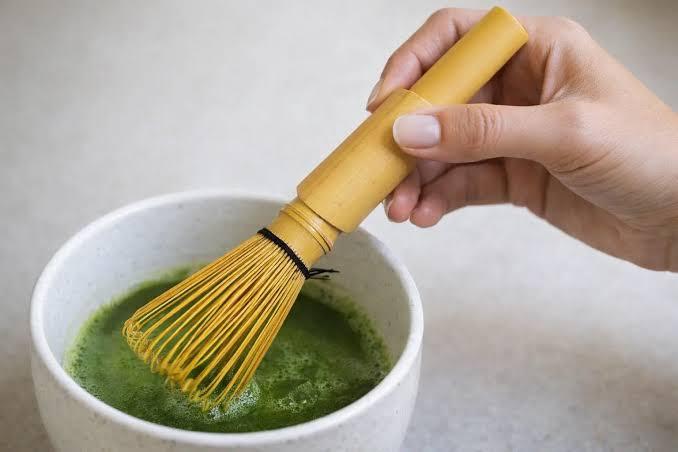
The Chasen (Bamboo Whisk): Carved from a single piece of bamboo, a traditional chasen features anywhere from 80 to 120 fine, curled tines. The flexible bamboo prongs are designed to suspended the microscopic tea particles evenly in the water, shearing the liquid to create a thick layer of fine foam that a metal whisk simply cannot replicate.
-
A Fine-Mesh Sifter: Matcha powder is highly electrostatic. As it sits in a tin, the fine particles naturally attract one another, creating dense, tiny clumps. Sifting the powder before adding water is an essential step to ensure a smooth texture.
-
The Chawan (Matcha Bowl): A wide, flat-bottomed ceramic bowl. The wide base gives your bamboo whisk the clearance it needs to move rapidly without hitting the walls, allowing for optimal aeration.
-
An Electric Milk Frother: While optional if you are comfortable heating milk on a stovetop, a steam wand or a motorized inductive frother is crucial for achieving the micro-foam texture that gives the latte its luxurious mouthfeel.
Water Temperature: The Golden Rule of Matcha
If you pour boiling water (100°C / 2120°F) directly onto matcha powder, you will instantly scald the tea. High heat causes a rapid release of bitter tannins and denatures the delicate L-theanine amino acids, ruining the flavor profile and degrading the health-promoting catechins.
The Golden Temperature Zone: Always use filtered water cooled to between 70°C and 80°C (160°F to 175°F).
If you do not own a temperature-controlled electric kettle, bring your water to a boil, then open the lid and let it rest for three to four minutes to drop into this ideal zone before pouring.
Step-by-Step Guide: How to Make Matcha Latte at Home
This reliable method yields a balanced, cafe-style hot matcha latte using authentic whisking techniques.
Choosing the Ideal Milk Matrix
The type of milk you choose does more than just change the calorie count; it directly interacts with the flavor compounds in the tea. Matcha contains a strong umami profile due to its high amino acid content, which can be complemented or masked depending on your milk choice.
1. Oat Milk (The Barista Choice)
Oat milk has quickly become the preferred pairing for matcha lattes worldwide. Its natural, grain-like sweetness perfectly balances the vegetal notes of the tea without overpowering them. Additionally, barista-blend oat milks are formulated with food-grade stabilizers that emulsify beautifully, creating a silky micro-foam that holds its structure.
2. Whole Dairy Milk (The Creamy Classic)
Whole dairy milk provides a luxurious mouthfeel due to its balanced fat-to-protein ratio. The milk fats coat the palate, softening any residual astringency in the matcha. However, be aware that some nutritional studies suggest the proteins in dairy milk (specifically caseins) can bind to the catechins in green tea, slightly reducing their bio-accessibility in the digestive tract.
3. Almond Milk (The Light Alternative)
Unsweetened almond milk offers a low-calorie, nutty option. Because it lacks a heavy protein structure, it produces a much thinner foam that can separate quickly. Opt for a premium or “barista edition” almond milk to ensure a smoother blend.
The Iced Matcha Latte: A Refreshing Alternative
When the weather warms up, an iced version offers a crisp, clean alternative that highlights the refreshing notes of the tea.
How to Prepare an Iced Matcha Latte
-
Whisk the Concentrate: Whisk 2 grams of sifted matcha powder into 2 ounces of warm water (70°C) exactly as you would for a hot latte. Whisk thoroughly until smooth and frothy.
-
Prepare the Glass: Fill a tall 12-ounce glass to the brim with clean ice cubes. Pour 6 to 8 ounces of cold milk directly over the ice.
-
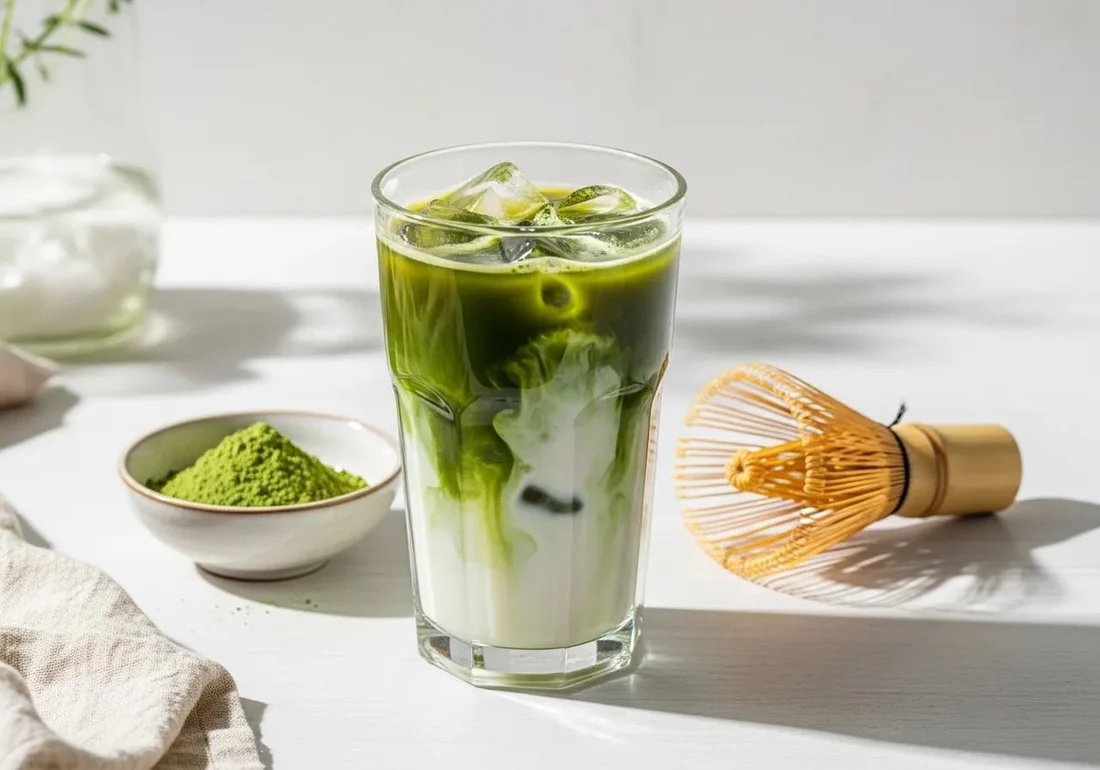
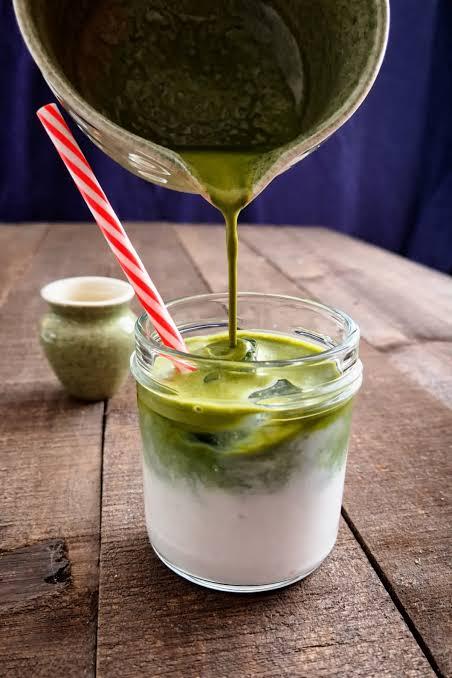
The Pour: Slowly pour the warm matcha concentrate directly over the top ice cubes. The ice slows down the liquid’s descent, creating a striking, distinct green-and-white layered effect. Stir gently with a straw before drinking to blend the layers.
Troubleshooting Common Home-Brew Mistakes
Problem: My latte tastes bitter and grassy.
- Solution: Your water was likely too hot, or you used a low-quality culinary grade powder. Lower your water temperature to 70°C (158°F) and ensure you are buying a reputable shade-grown Japanese matcha.
Problem: There are dark green clumps at the bottom of my mug.
- Solution: Do not skip the sifting step. If you do not own a sifter, try blending the matcha powder with a tiny splash of cold water into a thick, uniform paste using the back of a spoon before adding the remaining hot water.
Problem: I can’t get any foam on top.
- Solution: Ensure your wrist is moving strictly in a linear back-and-forth “W” shape, not a circular motion. If you don’t have a bamboo whisk, an electric handheld milk frother (a battery-operated whisk) can be used as a modern workaround to create foam in a pinch.
FAQs Section
Does matcha break an intermittent fast?
Pure matcha whisked solely with hot water contains fewer than 5 calories per serving and does not cause an insulin spike, meaning it will not break an intermittent fast. However, adding milk, oat milk, or sweeteners to create a latte introduces sugars and fats that will immediately end a fast. Stick to ceremonial matcha with plain water during your fasting window.
Can I drink a matcha latte every day?
Yes, daily consumption of matcha is generally well-tolerated and offers excellent health benefits due to its high antioxidant density. However, because it contains active caffeine, individuals sensitive to stimulants should monitor their total intake and avoid consuming it within six to eight hours of bedtime to preserve sleep quality.
Is matcha better for you than coffee?
Matcha isn’t inherently “better,” but it offers a different metabolic and neurological experience. Coffee delivers a faster, higher spike in caffeine, which can lead to quick alertness followed by a sharp energy dip for some. Matcha provides a more sustained, moderate energy release paired with the calming, focus-enhancing effects of L-theanine, making it an excellent alternative for those prone to caffeine-induced anxiety.
How should I store my matcha powder to keep it fresh?
Matcha is incredibly sensitive to oxidation, light, and heat. Once exposed to oxygen, its color will quickly degrade to a dull brown, and its flavor will become bitter. Always store your matcha in an airtight, opaque tin inside the refrigerator. For the best flavor and nutritional value, consume the tin within four to six weeks of opening.
Key Takeaways
-
Temperature control is crucial: Never use boiling water. Keep your water between 70°C and 80°C (160°F to 175°F) to protect the sweet amino acids and prevent bitterness.
-
Always sift your powder: Sifting eliminates static clumps, ensuring a smooth, velvety texture without gritty settlement at the bottom of your cup.
-
Whisk in a “W” motion: Avoid circular stirring. A rapid back-and-forth linear motion aerates the liquid properly, creating a beautiful micro-foam.
-
Invest in the right grade: Use a high-quality ceremonial or premium culinary grade matcha from Japan for the best balance of natural sweetness and deep umami flavors.
Scientific References
-
Dietz, C., & Dekker, M. (2017). Effect of Green Tea Phytochemicals on Mood and Cognition. Current Pharmaceutical Design, 23(19), 2876–2905. [PubMed PMID: 28056735]
-
Weiss, D. J., & Anderton, C. R. (2003). Determination of catechins in matcha green tea by micellar electrokinetic chromatography. Journal of Chromatography A, 1011(1-2), 173-180. [PubMed PMID: 14518774]
-
Nobre, A. C., Rao, A., & Owen, G. N. (2008). L-theanine, a natural constituent in tea, and its effect on mental state. Asia Pacific Journal of Clinical Nutrition, 17(S1), 167-168. [PubMed PMID: 18296328]
-
Unno, K., et al. (2018). Stress-Reducing Function of Matcha Green Tea in Animal Experiments and Clinical Trials. Nutrients, 10(10), 1468. [MDPI Open Access]