Address
304 North Cardinal
St. Dorchester Center, MA 02124
Work Hours
Monday to Friday: 7AM - 7PM
Weekend: 10AM - 5PM
Address
304 North Cardinal
St. Dorchester Center, MA 02124
Work Hours
Monday to Friday: 7AM - 7PM
Weekend: 10AM - 5PM
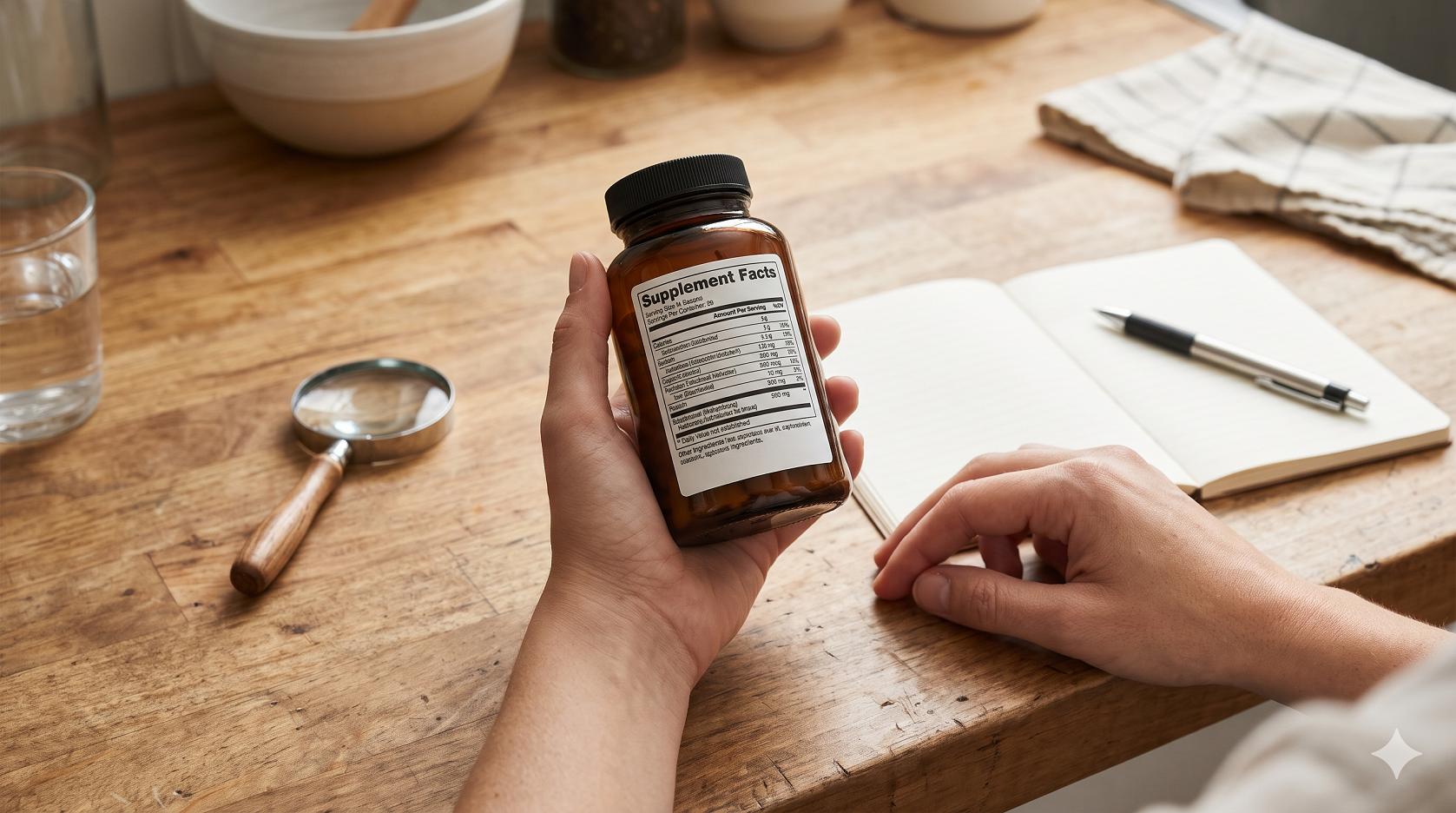
Standing in the supplement aisle—or scrolling through an online storefront—can feel like trying to decipher a foreign language. Weight management products are among the most aggressively marketed items in the wellness industry, often wrapped in bold claims about “metabolic support,” “thermogenic blends,” and “appetite control.“
Yet the front of the bottle is essentially a billboard. The real story sits on the back, inside a black-and-white box titled Supplement Facts.
In the United States, dietary supplements are regulated differently from prescription and over-the-counter drugs. Under the Dietary Supplement Health and Education Act of 1994 (DSHEA), the U.S. Food and Drug Administration (FDA) does not review or approve dietary supplements for safety or effectiveness before they hit store shelves. That regulatory reality puts a significant amount of responsibility on the buyer. Learning how to read a Supplement Facts label is the most practical way to evaluate what you are actually paying for, spot red flags, and avoid ingredients that could interact with your health or medications.
Manufacturers have wide latitude when designing the front of a bottle, provided they stay within specific legal boundaries. They can use structure/function claims—statements describing how an ingredient affects the normal structure or function of the body, such as “supports healthy metabolism” or “helps maintain energy levels.” They cannot legally claim that a supplement prevents, treats, or cures a disease, including clinical obesity.
Whenever a product makes a structure/function claim, federal law requires a mandatory disclaimer on the label: “This statement has not been evaluated by the Food and Drug Administration. This product is not intended to diagnose, treat, cure, or prevent any disease.”
While front-of-package phrasing is designed to sell the product, the Supplement Facts panel is governed by strict FDA formatting rules (21 CFR 101.36). It forces the manufacturer to disclose serving sizes, active ingredients, exact dosages (with one major loophole, which we will cover shortly), and inactive fillers. Reading this panel systematically strips away the marketing and leaves you with the raw data.
Every legally compliant dietary supplement sold in the U.S. follows the same basic layout. Here is how to read each section from top to bottom.
1. Serving Size and Servings Per Container
Always start at the very top. Every number listed below this line applies to one serving, not necessarily one capsule, gummy, or scoop.
Weight management formulas frequently require two, three, or even four capsules to constitute a single serving. A bottle containing 60 capsules might look like a two-month supply at a glance, but if the serving size is 3 capsules, it will only last 20 days. Checking this line first prevents accidental under-dosing, accidental over-dosing—especially with stimulants—and helps you calculate the true cost per day.
2. Amount Per Serving
This column lists the weight of each active ingredient in a single serving, typically measured in:
Grams (g): Common for macronutrients like fiber, protein, or collagen.
Milligrams (mg): Used for most herbal extracts, amino acids, caffeine, and minerals.
Micrograms (mcg): Used for potent micronutrients like vitamin B12, chromium, or biotin.
International Units (IU): Occasionally still seen on fat-soluble vitamins (A, D, E), though updated FDA rules favor mcg or mg.
Pay close attention to the units. A product containing 200 mcg of chromium picolinate is very different from one containing 200 mg.
3. Percent Daily Value (%DV)
The %DV shows how much a nutrient in a single serving contributes to a standard 2,000-calorie daily diet. This column is helpful for essential vitamins and minerals—like vitamin D, magnesium, or B vitamins—because it tells you whether a dose is a small top-up or a mega-dose exceeding 100% of your daily requirement.
For most weight management ingredients, however, you will see a dagger symbol (†) or an asterisk (*) in the %DV column, leading to a footnote that reads: “Daily Value not established.”
This does not automatically mean an ingredient is unsafe or ineffective. It simply means federal health authorities have not set an official daily intake requirement for that compound. Botanicals, amino acids, caffeine, and green tea extract all fall into this category.
4. Dietary Ingredients and Plant Parts
Ingredients with an established Daily Value (vitamins, minerals, fiber) are listed in the top half of the panel. Below a thick horizontal bar, you will find other dietary ingredients—herbs, botanical extracts, enzymes, and stimulants.
For botanical ingredients, federal rules require the label to specify the part of the plant used (such as root, leaf, bark, or seed) if the whole plant is not used. Look for standardized extracts. For example, “Green Tea Leaf Extract (standardized to 50% EGCG)” tells you the exact concentration of the active compound—epigallocatechin gallate—rather than just a raw, variable powder of crushed leaves.
5. “Other Ingredients” (Below the Box)
Directly underneath the Supplement Facts box is a list of inactive ingredients, listed in descending order by weight. These include capsule shells (gelatin or plant-based cellulose), binders, flow agents (like magnesium stearate or silicon dioxide), artificial colors, sweeteners, and preservatives.
If you have food allergies, follow a vegetarian or vegan diet, or prefer to avoid sugar alcohols (like sorbitol or maltitol, which can cause gastrointestinal distress in gummies and chewables), this is the section to inspect.
If there is one section of a weight management label that deserves extra skepticism, it is the proprietary blend—sometimes called a “complex,” “matrix,” or “formula.”
Under FDA regulations, manufacturers are allowed to group multiple ingredients together under a single umbrella name. They must list the total combined weight of the blend and list the individual ingredients in descending order by weight, from heaviest to lightest. However, they do not have to disclose the exact amount of each individual ingredient inside the blend.
Proprietary blends create two distinct problems for consumers:
Under-dosing (“Fairy Dusting”): A company might advertise a trendy, clinically studied ingredient on the front of the bottle, then bury it near the bottom of a proprietary blend in a fraction of the dose used in human clinical trials. Because the exact milligram amount is hidden, you have no way of knowing if the dose is meaningful.
Hidden Stimulant Loads: Conversely, a blend might be heavily weighted toward cheap, potent stimulants like anhydrous caffeine, guarana, or bitter orange (Citrus aurantium) to make the user “feel” the product working. Without exact numbers, it is difficult to gauge how much stimulant you are taking—or how it adds up alongside your morning coffee.
Whenever possible, favor transparent labels that disclose the exact milligram or microgram amount of every single active ingredient.
The National Institutes of Health (NIH) Office of Dietary Supplements notes that while dozens of ingredients appear in weight-loss supplements, robust clinical evidence showing significant, sustained weight loss in humans is limited for most of them. Knowing how to spot common categories on a label helps you weigh modest potential benefits against real safety risks.
| Ingredient Category | Common Label Names | What to Check on the Label | Key Safety Considerations |
| Stimulants | Caffeine anhydrous, guarana, yerba mate, green coffee bean extract, kola nut | Total caffeine content per serving (including natural sources) | Can cause jitteriness, insomnia, elevated heart rate, and increased blood pressure. The FDA cites 400 mg/day as a general upper limit for healthy adults. |
| Thermogenic Botanicals | Bitter orange (Citrus aurantium, p-synephrine), capsaicin, cayenne pepper | Exact dosage and whether it is combined with caffeine | Bitter orange combined with caffeine has been linked to cardiovascular side effects, including elevated blood pressure and arrhythmias, particularly in sensitive individuals. |
| Concentrated Plant Extracts | Green tea extract (EGCG), Garcinia cambogia (HCA) | Standardization percentage and total daily dose of EGCG | While brewed green tea is generally safe, high-dose green tea extract supplements—especially taken on an empty stomach—have been linked in rare cases to liver injury. |
| Soluble Fibers | Glucomannan (konjac root), psyllium husk, inulin | Grams of dietary fiber per serving and water intake instructions | Can support fullness, but glucomannan tablets/capsules must be taken with plenty of water to prevent choking or esophageal blockage. May affect absorption of oral medications. |
| Minerals & Fatty Acids | Chromium picolinate, Conjugated Linoleic Acid (CLA) | Exact mcg/mg dose and form of the mineral | Human trials show minimal weight-loss effects. CLA may cause mild gastrointestinal upset and has mixed evidence regarding insulin sensitivity. |
According to the FDA, weight loss is one of the top categories for tainted supplements—products illegally spiked with undeclared active pharmaceutical ingredients (such as sibutramine, which was pulled from the U.S. market in 2010 due to cardiovascular risks, or hidden laxatives and diuretics).
While a tainted product will not list an illegal drug on its label, poor-quality or risky products often share recognizable warning signs:
Disease or rapid-loss claims: Phrases like “melts belly fat in 7 days,” “guaranteed 10-pound loss,” or “clinically proven to cure obesity” violate federal labeling rules and signal an untrustworthy manufacturer.
Missing contact information: Legally compliant supplements must include the name and place of business of the manufacturer, packer, or distributor, along with a domestic address or phone number for reporting serious adverse events.
Multiple stimulant sources stacked together: Seeing caffeine anhydrous, green tea extract, guarana, and yerba mate in the same formula—especially inside a proprietary blend—is a recipe for overstimulation.
No lot number or expiration date: Reputable manufacturers print a batch/lot number and an expiration or “best by” date on the bottle to track quality and potency.
Because the FDA does not pre-approve supplements before they are sold, independent third-party verification is one of the strongest indicators of manufacturing quality. Look for seals from established organizations:
USP (U.S. Pharmacopeia): Verifies that the product contains the ingredients listed on the label in the declared potency, does not contain harmful levels of contaminants (like heavy metals or pesticides), and was manufactured under FDA Good Manufacturing Practices (GMPs).
NSF International: Offers both general dietary supplement certification and NSF Certified for Sport, which screens for hundreds of banned athletic substances and undeclared stimulants.
ConsumerLab.com: Conducts independent laboratory testing on retail products for purity, potency, and disintegration.
Keep in mind what these seals do not prove: a USP or NSF seal confirms that the bottle contains what the label says it contains and is free of major contaminants. It does not prove that the supplement will cause weight loss.
Even a cleanly labeled, third-party-tested supplement is not automatically safe for everyone. Consult a physician or registered pharmacist before starting any weight management product if you:
Have high blood pressure, heart disease, a history of arrhythmias, thyroid disorders, or liver or kidney disease.
Take prescription medications, especially blood thinners, blood pressure drugs, antidepressants, diabetes medications, or stimulants.
Are pregnant, trying to become pregnant, or breastfeeding.
Have a history of disordered eating.
Stop taking a supplement immediately and seek medical evaluation if you experience chest pain, palpitations, severe headaches, dizziness, unusual fatigue, dark urine, or yellowing of the skin or eyes (jaundice).
1. Does “FDA Registered Facility” on a supplement bottle mean the product is FDA approved?
No. Dietary supplement manufacturers are required to register their facilities with the FDA, so stating “made in an FDA-registered facility” simply means the company complied with basic administrative registration. It does not mean the FDA tested, reviewed, or approved the supplement itself.
2. Why do some ingredients say “Daily Value not established”?
The Daily Value (%DV) only applies to nutrients for which federal agencies have established recommended daily intake levels, such as vitamins, minerals, protein, and fiber. Herbal extracts, amino acids, and compounds like caffeine do not have official Daily Values, so the label displays a symbol noting that no value is established.
3. Is a higher milligram dose always better?
Not necessarily. More is not always more effective, and higher doses can increase the risk of side effects. For example, high doses of concentrated green tea extract or caffeine increase the risk of liver stress or cardiovascular side effects without providing proportional benefits.
4. How can I tell how much caffeine is in a weight management supplement?
Look for a specific line listing “Caffeine” or “Caffeine Anhydrous” in milligrams. Keep in mind that if the label also lists guarana, yerba mate, kola nut, or green tea extract—especially inside a proprietary blend—the total caffeine content may be higher than what is explicitly stated, unless the manufacturer lists a “Total Caffeine” figure on the label.
5. Can weight management supplements replace diet and exercise?
No. According to the NIH Office of Dietary Supplements, no dietary supplement has been shown to produce substantial, long-term weight loss on its own. Sustainable weight management relies primarily on dietary patterns, physical activity, sleep, and—when clinically appropriate—evidence-based medical care.
Reading a Supplement Facts label takes less than a minute once you know where to look. Start at the serving size to understand the real dose and cost, check for transparent ingredient amounts rather than proprietary blends, scan for stacked stimulants, and look for independent third-party testing seals. Taking those few moments before buying shifts the balance of power back to you—helping you spend your money wisely and protect your health.
Medical Disclaimer: This article is for informational and educational purposes only and is not intended as medical advice, diagnosis, or treatment. Dietary supplements are not intended to diagnose, treat, cure, or prevent any disease. Always consult a qualified healthcare professional before starting any new dietary supplement, especially if you have an existing medical condition or take prescription medications.